




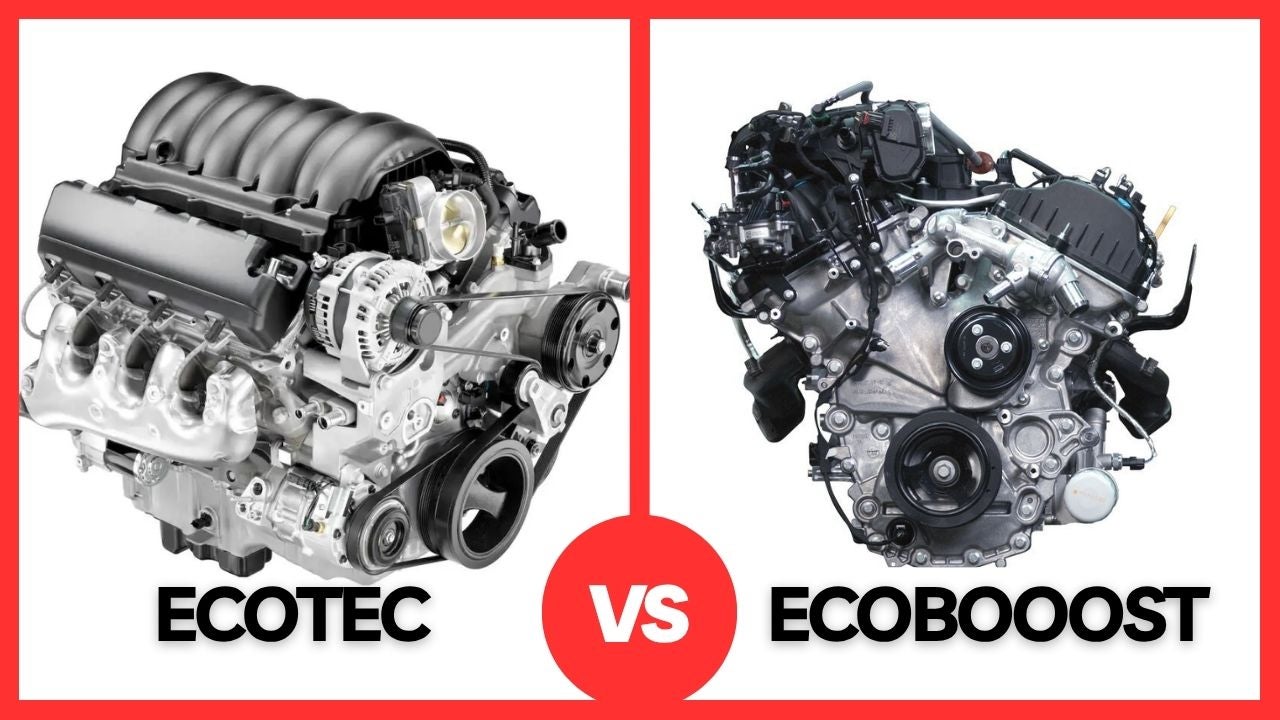
Chevy EcoTec vs. Ford EcoBoost: Chevrolet's EcoTec engines and Ford's EcoBoost engines are both turbocharged, direct-injected powerplants built to squeeze more performance out of a smaller footprint, but they take different paths to get there. EcoTec favors compact, efficient three- and four-cylinder designs across the Chevy Trax, Trailblazer, Equinox and Malibu, while EcoBoost spans a wider range of displacements used in everything from Ford's crossovers to its full-size trucks. Below, we compare the power, technology and fuel economy of each lineup so you can decide which platform fits your driving needs, and the team at Northcutt Chevrolet is happy to help you find the right vehicle to match.
If you have been cross-shopping a Chevy against a Ford, chances are you have run into these two engine names. Both automakers built their small-displacement turbo lineups around the same basic idea: use a turbocharger and direct fuel injection to get more power and torque out of a lighter, more efficient engine, so you are not stuck choosing between performance and fuel economy. Where they differ is in the details, from displacement and cylinder count to how each engine is tuned for its specific vehicle. Below, the team at Northcutt Chevrolet puts the two lineups side by side, using the current specifications for the engines you will actually find under the hood of a new Chevy or Ford today.
What Is the Chevy EcoTec Engine Family?
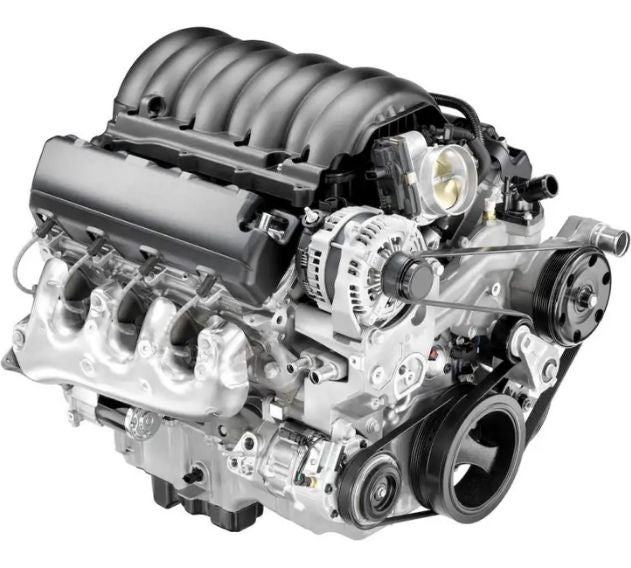
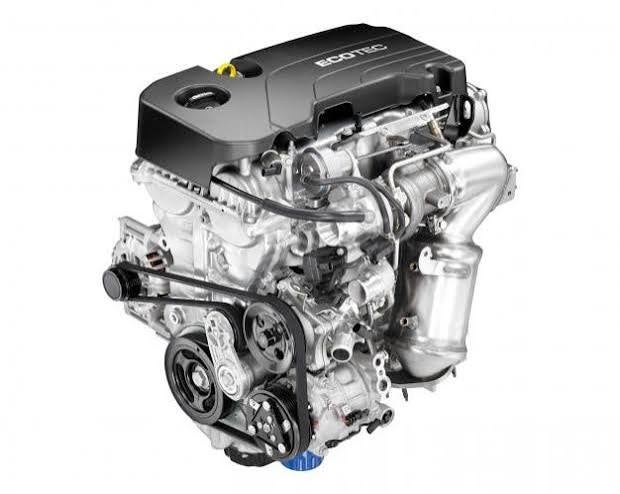
EcoTec is Chevrolet's name for its lineup of turbocharged, direct-injection three- and four-cylinder engines. Every EcoTec engine in our current lineup uses Spark Ignition Direct Injection (SIDI), a dual overhead camshaft (DOHC) design, continuously variable valve timing and automatic stop and start technology, and every one of them runs on regular 87 octane fuel. That combination is designed to deliver strong low-end torque and steady real-world fuel economy without asking you to pay for premium gas at the pump.
The EcoTec name currently covers three engines in our showroom: a 1.2-liter turbocharged three-cylinder that is the exclusive engine in the Chevy Trax, a 1.3-liter turbocharged three-cylinder available in the Chevy Trailblazer, and a 1.5-liter turbocharged four-cylinder used in both the Chevy Equinox and the Chevy Malibu.
What Is the Ford EcoBoost Engine Family?
Ford's EcoBoost family covers a much broader range than EcoTec, spanning three-, four- and six-cylinder turbocharged engines from 1.0 liters up to 3.5 liters. That range lets Ford use the same basic EcoBoost technology, turbocharging, direct injection and Twin Independent Variable Camshaft Timing (Ti-VCT), in everything from the compact Escape and Bronco Sport up through the Explorer, Bronco, Ranger, F-150 and Expedition.
For the comparison at hand, the EcoBoost engines closest to Chevy's EcoTec lineup are the 1.5-liter turbocharged three-cylinder found in the Escape and Bronco Sport, the 2.0-liter turbocharged four-cylinder offered on higher trims like the Bronco Sport Badlands, and the 2.3-liter turbocharged four-cylinder used in the Ranger, Bronco, Explorer and Mustang.
EcoTec vs. EcoBoost: Power and Performance Compared
Here is how the most comparable engines in each lineup stack up on paper.
| Engine | Displacement | Horsepower | Torque | Representative Model |
|---|---|---|---|---|
| Chevy EcoTec Turbo I3 | 1.2L | 137 hp | 162 lb-ft | Trax |
| Chevy EcoTec Turbo I3 | 1.3L | 155 hp | 174 lb-ft | Trailblazer |
| Chevy EcoTec Turbo I4 | 1.5L | 175 hp | 203 lb-ft | Equinox / Malibu |
| Ford EcoBoost Turbo I3 | 1.5L | 180 hp | 199 lb-ft | Escape |
| Ford EcoBoost Turbo I4 | 2.3L | 270 hp | 310 lb-ft | Ranger |
| Ford EcoBoost Turbo I4 | 2.3L | 315 hp | 350 lb-ft | Mustang |
The numbers show the two philosophies. EcoTec keeps horsepower and torque figures modest but consistent, and every EcoTec engine runs on regular fuel. EcoBoost's smallest engines land in a similar range, but the lineup climbs quickly once you move into the 2.3-liter engine, which trades some of that low-end simplicity for meaningfully more horsepower and torque in vehicles like the Mustang and Ranger.
Turbocharging, Injection and Other Technology Differences
Both EcoTec and EcoBoost lean on the same core formula: a turbocharger to pressurize incoming air, direct fuel injection to place fuel precisely in the combustion chamber, and variable valve timing to balance power and efficiency as you drive. Where the two families diverge is in the extra technology layered on top. Ford's 1.5-liter EcoBoost combines direct injection with port fuel injection and adds cylinder deactivation, shutting down cylinders when full power is not needed, to help close the efficiency gap. Every current EcoTec engine sticks with a simpler SIDI-only setup paired with automatic stop and start.
One naming note worth clearing up: EcoTec should not be confused with EcoTec3, which is the name Chevrolet uses for its V6 and V8 engines in the Silverado and Tahoe. If you want to see our full lineup of gas and diesel engine options, or you are cross-shopping trucks specifically, take a look at how the Silverado stacks up against the F-150.
Fuel Economy and Efficiency
Fuel economy is where EcoTec's smaller displacement engines tend to shine in city driving. The 1.2-liter EcoTec in the Chevy Trax is rated up to 28 mpg city and 32 mpg highway, and the 1.3-liter EcoTec in the front-wheel-drive Trailblazer is rated up to 29 mpg city and 31 mpg highway. Ford's 1.5-liter EcoBoost in the Escape is rated up to 27 mpg city and 34 mpg highway in front-wheel drive, giving EcoBoost a highway mpg edge in that comparison while EcoTec holds a slight advantage around town.
Because every current EcoTec engine runs on regular 87 octane fuel, the cost of fueling up stays consistent no matter which Chevy model you choose. Some higher-output EcoBoost applications, like the 2.3-liter in the Mustang, are tuned to make the most power on premium fuel, which is worth factoring into your long-term cost of ownership.
Which Northcutt Chevrolet Models Use the EcoTec Engine?
If you like what you see from the EcoTec lineup, here is where you will find each engine in our current inventory:
- Chevy Trax – powered exclusively by the 1.2-liter turbocharged EcoTec engine
- Chevy Trailblazer – available with the 1.3-liter turbocharged EcoTec engine, including flex-fuel capability on select trims
- Chevy Equinox – equipped with the 1.5-liter turbocharged EcoTec engine
- Chevy Malibu – also equipped with the 1.5-liter turbocharged EcoTec engine
Our new inventory changes regularly, and our current new vehicle specials can make the switch even more affordable, so the best way to see current pricing and availability is to browse our new inventory online or give us a call at (800) 997-0790 and we will help you find the EcoTec-powered Chevy that fits your budget.
Choosing the Right Engine for Your Driving Needs
There is no single right answer between EcoTec and EcoBoost. It comes down to what you drive and how you drive it. If low-end torque, regular-fuel savings and a lower price point matter most, the Trax's 1.2-liter EcoTec or the Trailblazer's 1.3-liter EcoTec are hard to beat. If you want more cabin room without giving up efficiency, the Equinox and Malibu's 1.5-liter EcoTec strikes a good balance. If you are cross-shopping Ford and want more horsepower for towing light loads or highway passing, EcoBoost's 2.0-liter and 2.3-liter options offer more muscle, at the cost of using more fuel and, in some trims, needing premium gas. If a pre-owned option fits your budget better, our used inventory also includes EcoTec-equipped models already on our lot.
Whichever direction you lean, our team can walk you through financing options, help you get pre-qualified, run the numbers on our payment calculator, or get you a value your trade estimate on your current vehicle before you decide. Stop by our showroom during our hours or call (800) 997-0790 to schedule a test drive and feel the difference between EcoTec and EcoBoost for yourself.
FAQ
Is the Chevy EcoTec engine reliable?
Yes. EcoTec engines use a straightforward design, direct injection, a single turbocharger and standard maintenance intervals, and every current EcoTec engine is built to run on regular 87 octane fuel. Staying current on oil changes and other routine maintenance through our service center, including scheduling a service appointment when it is due, is the biggest factor in keeping any EcoTec engine running well for the long haul.
What is the difference between EcoTec and EcoTec3?
EcoTec refers to Chevrolet's turbocharged three- and four-cylinder engines used in models like the Trax, Trailblazer, Equinox and Malibu. EcoTec3 is a separate engine family, Chevrolet's naturally aspirated V6 and V8 engines used in trucks and full-size SUVs like the Silverado and Tahoe. The names are similar, but the engines are built for very different jobs.
Does the Ford EcoBoost engine require premium gas?
It depends on the engine. Ford's smaller EcoBoost engines, like the 1.5-liter in the Escape, are designed to run on regular fuel. Higher-output versions, such as the 2.3-liter EcoBoost in the Mustang, are tuned to deliver their peak horsepower and torque on premium fuel, so check the specific engine and trim before you budget for fuel costs.
Which is more fuel-efficient, EcoTec or EcoBoost?
It is close, and it depends on the specific engines you are comparing. Chevy's smaller EcoTec engines tend to hold a slight edge in city driving, while some EcoBoost engines post a higher highway mpg rating. Because every EcoTec engine runs on regular fuel, EcoTec can still come out ahead on overall fuel cost even when the mpg numbers are similar.
What Chevy models with the EcoTec engine does Northcutt Chevrolet have in stock?
Our new inventory includes the EcoTec-powered Trax, Trailblazer, Equinox and Malibu, and availability changes regularly. Call us at (800) 997-0790, contact us online, or browse our new inventory to see what is currently on our lot.